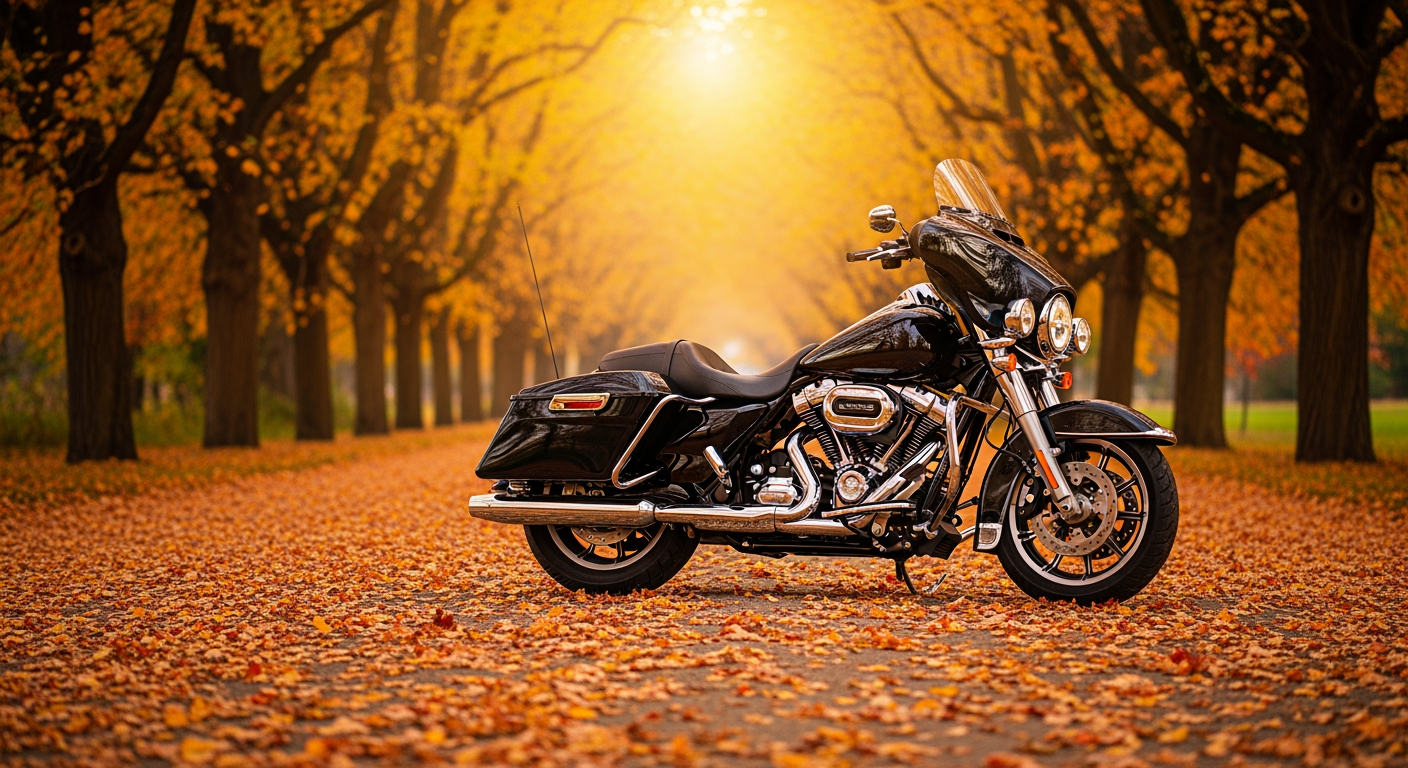
Wet Leaves and Cold Mornings: Fall Motorcycle Riding Hazards in Chicagoland
Ask most Chicago riders and they will tell you fall is the best season on two wheels. The heat breaks, the tree cover along Sheridan Road lights up gold and red, and the roads finally clear of summer traffic. It is also one of the sneakiest seasons to get hurt, because the same crisp mornings and colorful roads hide traction traps that do not exist in July.
The traction traps: wet leaves and morning frost
A dry leaf is nothing. A wet, matted layer of leaves is close to riding on ice. It hides the road surface, painted lines, and potholes, and it tears away grip the instant you lean or brake on top of it. Leaves pile up worst in exactly the spots you do not want to lose traction: shaded curves, tree-lined side streets, and off-ramps where they collect against the curb. By late fall, Chicagoland mornings dip below freezing while afternoons stay warm, leaving frost and thin black ice at dawn. Bridges and overpasses freeze first because cold air hits them from above and below, so the Chicago River crossings and the Kennedy and Eisenhower overpasses ice over before the road on either side does. Black ice is invisible. If the thermometer says 33 and the road looks a little too shiny, ride like it is ice.
Shorter days and sun glare at rush hour
Fall changes the light, not just the road surface. As the days get shorter, the evening commute slides into dusk and darkness, so you are harder to see and drivers who "just did not see the motorcycle" have more cover for that excuse. Reflective gear and a running headlight stop being optional. Then there is the glare: the low fall sun blasts straight down east-west streets like Irving Park and North Avenue during the morning and evening commute, and a blinded driver may never see you until it is too late. Assume that at sunrise and sunset, half the drivers around you are squinting into a wall of light, and give yourself extra space and escape routes.
Deer, cold tires, and the overlooked stuff
A few fall hazards catch riders off guard because they are not thinking about them.
- ✓ Deer are on the move. Fall is mating and migration season, and deer activity spikes at dawn and dusk. Around the Cook County forest preserves and the wooded two-lanes out toward DuPage and Lake County, where you see one, expect more.
- ✓ Cold tires do not grip. Rubber needs heat to work. On a 40-degree morning your tires are stiff and cold for the first several miles. Take it easy (no hard braking, no aggressive lean) until they warm up. Cold-tire lowsides are a classic early-fall crash.
- ✓ Temperature swings drop your pressure. Tire pressure falls about one pound per square inch for every 10-degree drop. Under-inflated tires handle worse and wear unevenly, so check your pressures more often as the season cools.
- ✓ Gear up for the cold. A shivering rider reacts slower and grips worse. Layers, insulated windproof gloves, a windproof jacket or liner, an anti-fog visor, and bright reflective gear keep your reactions fast.
When a fall-condition crash still happens
You can do everything right and still go down when a driver, a deer, or a hidden patch of ice makes the decision for you. If it happens, protect yourself and get medical care, because hidden injuries have a way of surfacing days later. Then document the conditions while they are fresh: photograph the leaves, the frost, the glare, and the exact spot. Here is the part riders get wrong about fault. A crash in bad fall conditions does not automatically mean it was your fault. Illinois uses modified comparative negligence, the 50% Rule (735 ILCS 5/2-1116), so if another party shares blame (a driver who turned into you, or a road left in a dangerous state), you can still recover as long as you are not more than 50% at fault. Your award is reduced by your share of fault, but it is not erased. Do not let an adjuster twist "it was slippery out" into "the rider caused it." Wet leaves and low sun do not hand the other driver a free pass.