Lane Splitting and Lane Filtering in Illinois: Is It Legal in 2026?
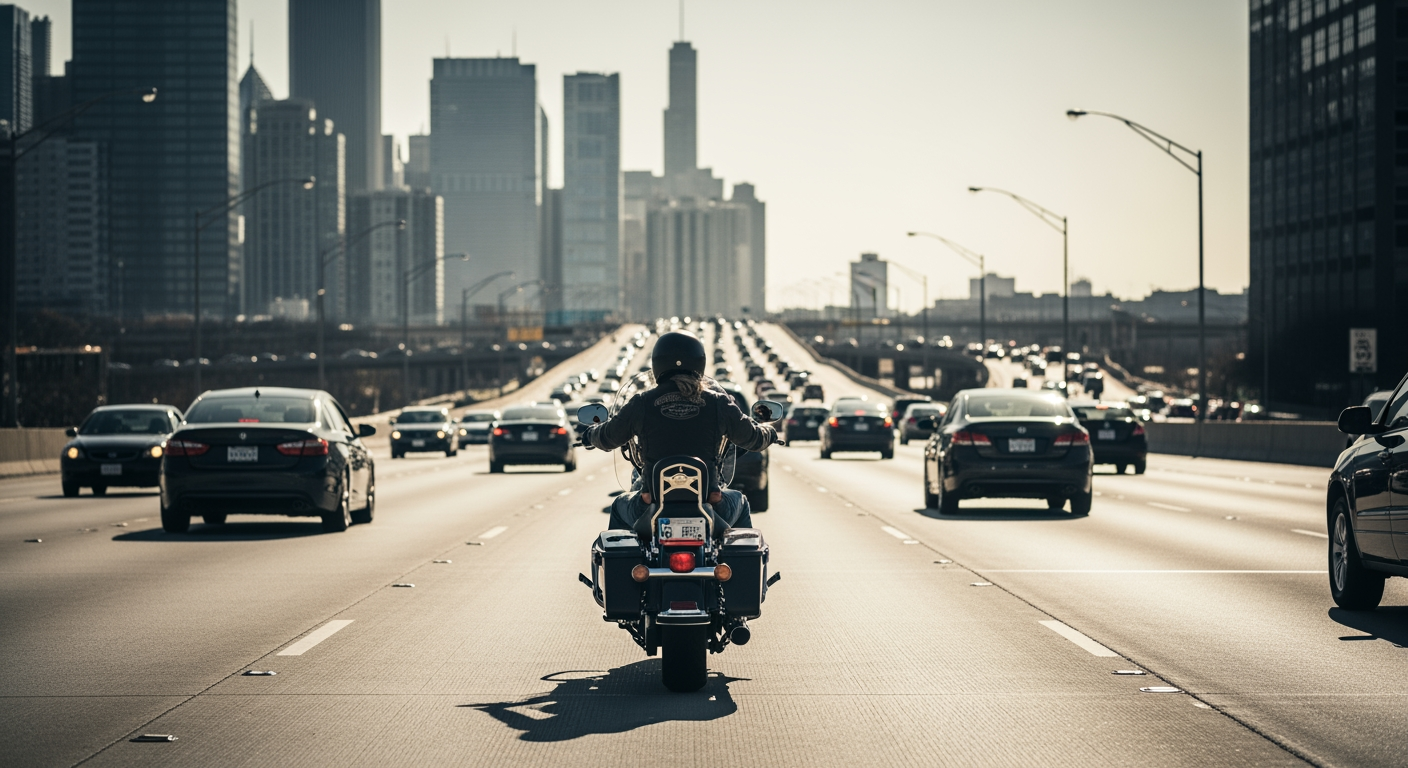
It is 5 p.m. on the Dan Ryan and traffic has not moved in ten minutes. Your engine is heating up and there is a clear gap between the stopped cars just wide enough to slip through. Every rider has felt that pull. Before you take it, you need a straight answer to a question a lot of Chicago riders get wrong: is lane splitting actually legal in Illinois, and if you are hit while doing it, what happens to your claim?
Lane Splitting vs. Lane Filtering: Know the Difference
People use these terms interchangeably, but they describe two different maneuvers. Lane splitting means riding between lanes of traffic that is moving, usually to get past slower cars on a highway or busy arterial. Lane filtering means moving between lanes of traffic that is stopped or crawling, typically to advance to the front at a red light, then settling back into a lane once traffic moves. A handful of states have carved out narrow rules permitting one or the other under specific conditions, which is part of why riders assume the practice is broadly accepted. It is not, and Illinois has not gone there.
Is Lane Splitting Legal in Illinois? The 2026 Status
The current status as we understand it in 2026 is that lane splitting is not legal in Illinois. The state has not passed a law permitting motorcyclists to ride between lanes of traffic, and the same goes for lane filtering. Illinois traffic law expects a motorcycle to occupy a full lane, the same as any other vehicle, and does not authorize riding the space between lanes. That means a Chicago rider who splits or filters is operating outside what the law allows and can be cited for it.
A word of caution, because it is how we operate: traffic laws change, and legislatures revisit motorcycle bills. Do not take a blog post, ours included, as the final word on the day you need it. Verify the current statute with a licensed Illinois attorney or the current Illinois Vehicle Code before you rely on it. Treat lane splitting and filtering as off-limits in Illinois until the law clearly says otherwise.
Why This Matters for Fault and the 50% Rule
The real danger of splitting in Illinois is not just a ticket. It is what it does to your injury claim if a car hits you while you are doing it. Illinois uses modified comparative negligence (735 ILCS 5/2-1116). Your recovery gets reduced by your share of fault, and if you are found more than 50% at fault, you recover nothing at all. Picture a crash while you are splitting. The insurer will argue you were operating between lanes where the law did not allow it, that you put yourself in a blind spot where the driver did not expect a vehicle, and therefore the crash is mostly or entirely your fault. Even if the driver did something wrong too, splitting hands the insurer a powerful lever to push your fault percentage up toward, or past, that 51% cliff.
Safer Alternatives on Chicago Roads
The urge to split in Chicago gridlock is real, but so are the consequences. Here are ways to manage heavy traffic without riding between lanes.
- ✓ Hold your lane position deliberately. Take the full lane so drivers see you as a vehicle instead of squeezing into gaps.
- ✓ Stagger your following distance. Keep an escape path and time to react, especially at stop-and-go on the Kennedy or Eisenhower.
- ✓ Cover your brakes and stay in a lower gear. In slow traffic that lets you move or stop instantly.
- ✓ Time your rides. Dodge the worst of Chicago's rush windows when you can.
- ✓ Watch the doors and front tires of stopped cars. Those are the early tells that someone is about to move or pull out.
What to Do If You Are Hit Anyway
Maybe you were splitting. Maybe you were not and the insurer is claiming you were. Either way, being hit while lane splitting does not automatically mean you get nothing. It means fault is contested, and contested fault is exactly where a good motorcycle lawyer earns their keep. Get medical care first and get it documented. Photograph everything: positions, damage, lane markings, sightlines. Get witness names. Do not admit fault or narrate the crash to the other insurer, because "I was just filtering up" can become their whole case. And call a lawyer before you give a recorded statement. As long as you are 50% or less at fault, you can still recover, just reduced. The whole battle is over that percentage, and it is not the insurance company's job to keep it fair.